Threepio
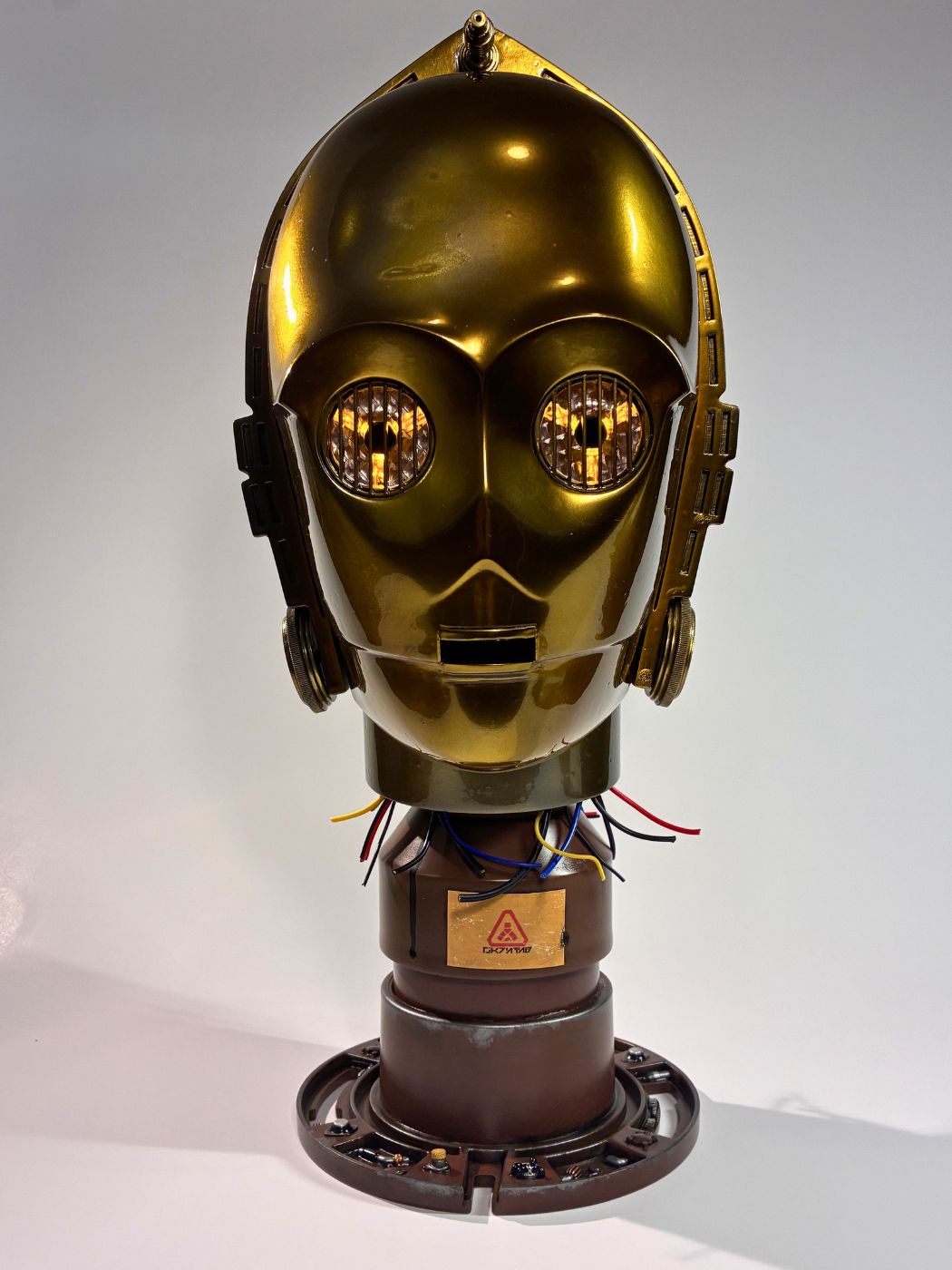
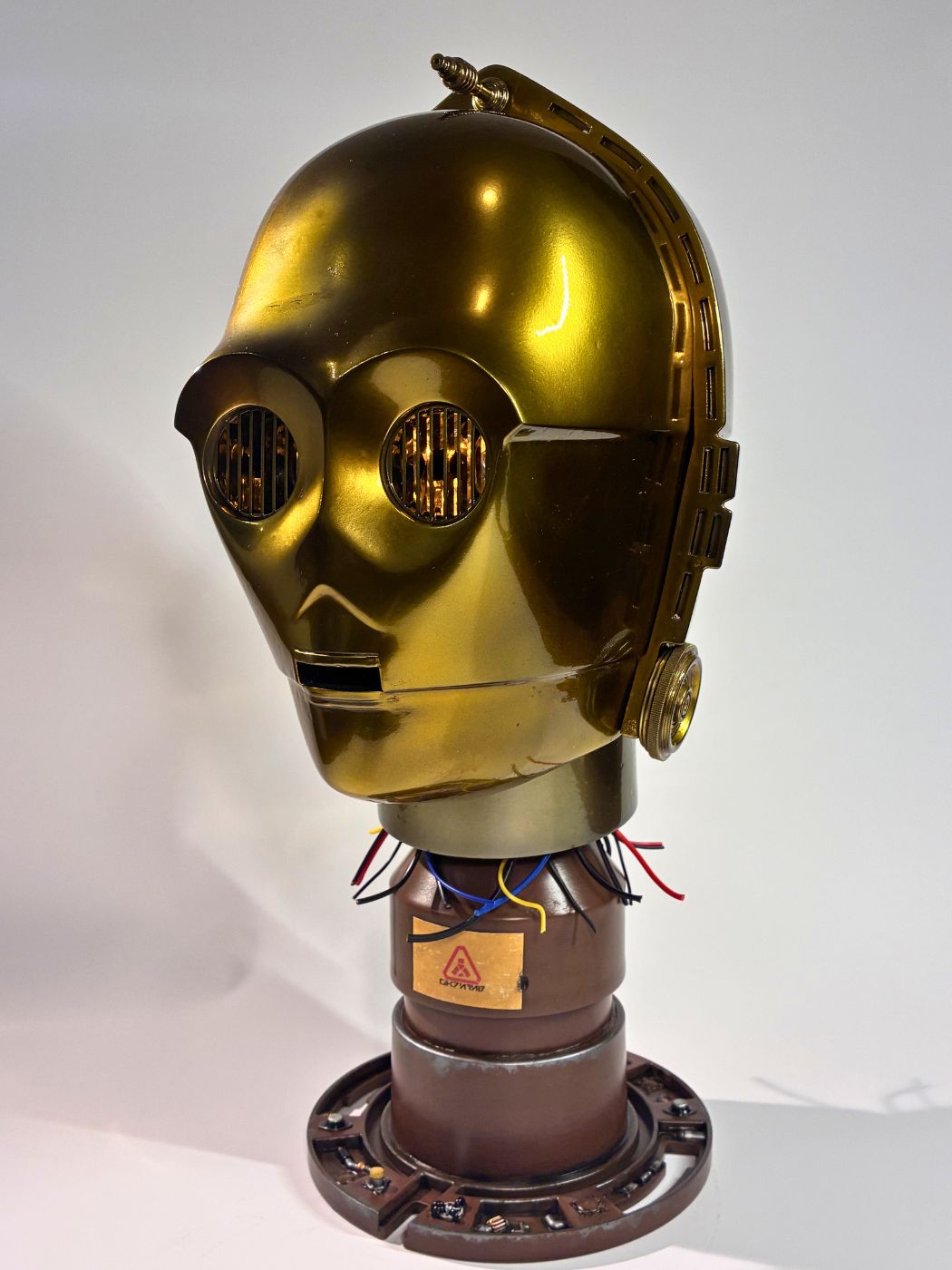
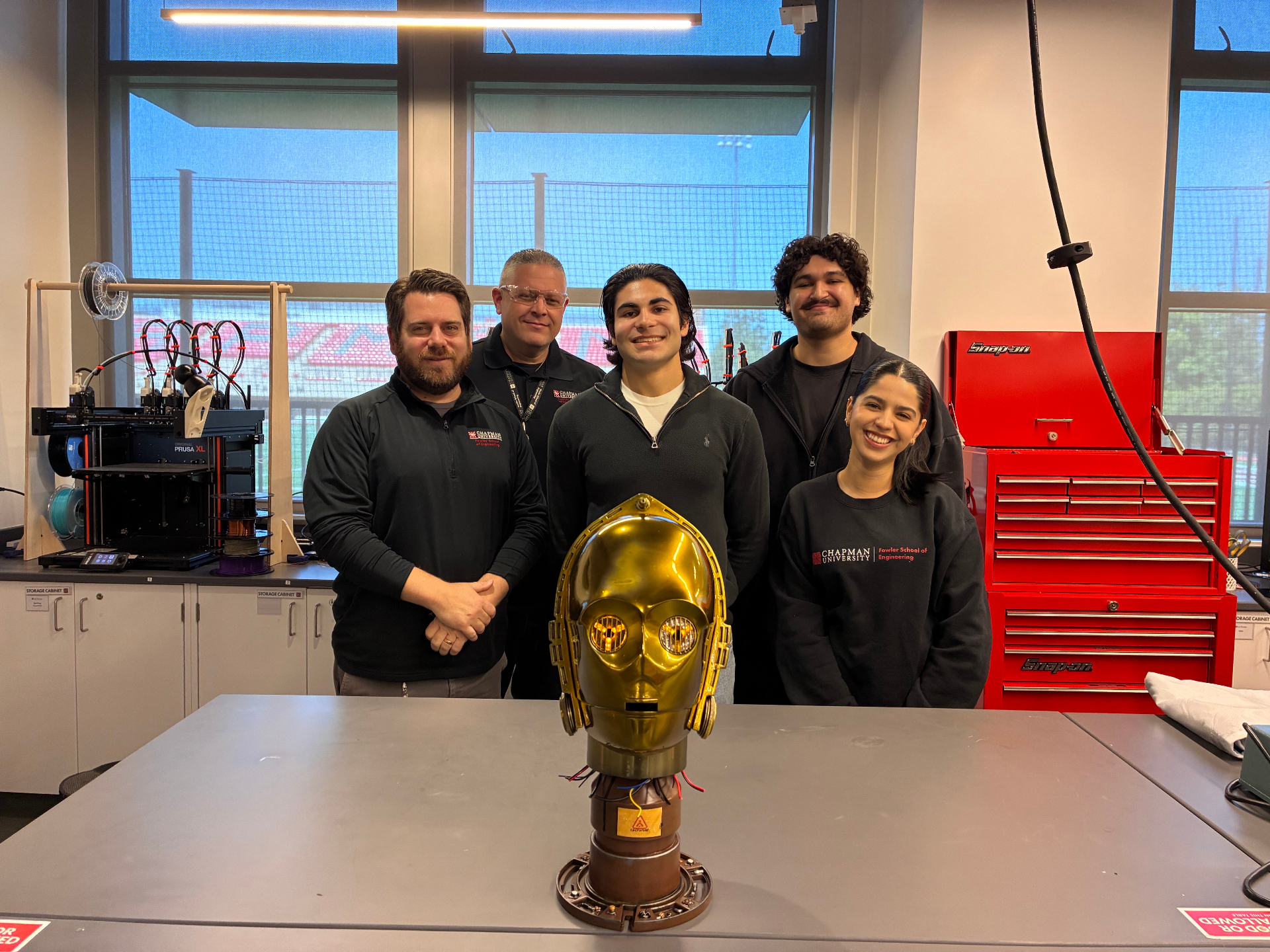
Threepio is a real-time conversational AI system embedded within a physical C-3PO-inspired platform. Live speech is captured, transcribed, reasoned over by a language model, shaped through a persona layer, synthesized into voice, and played through an exciter that turns the housing itself into a speaker.
It explores how AI changes when it stops living behind a screen and starts occupying a shared physical environment.
subsystems

01 / Origin
What happens when intelligence no longer has to live behind a screen?
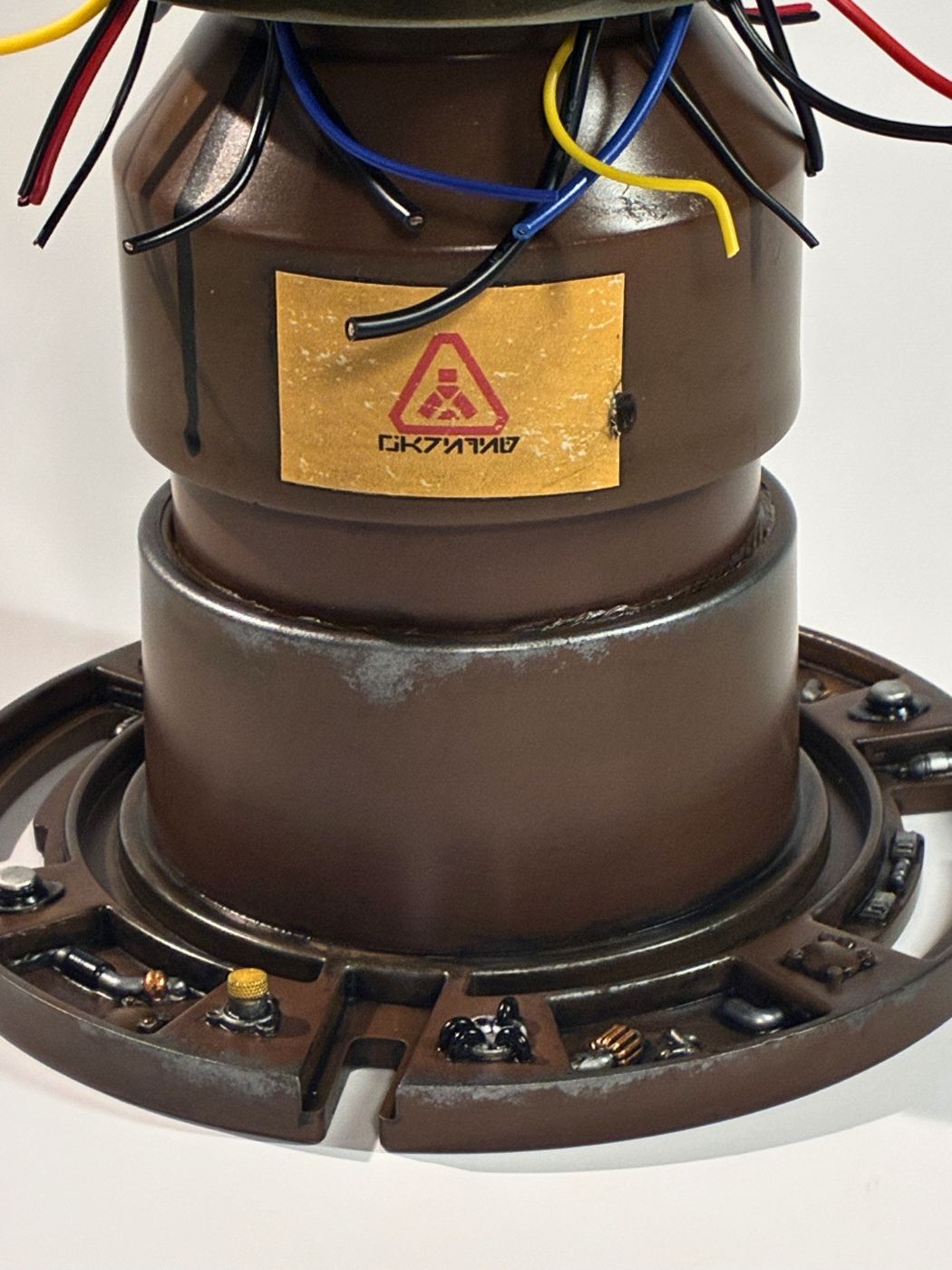
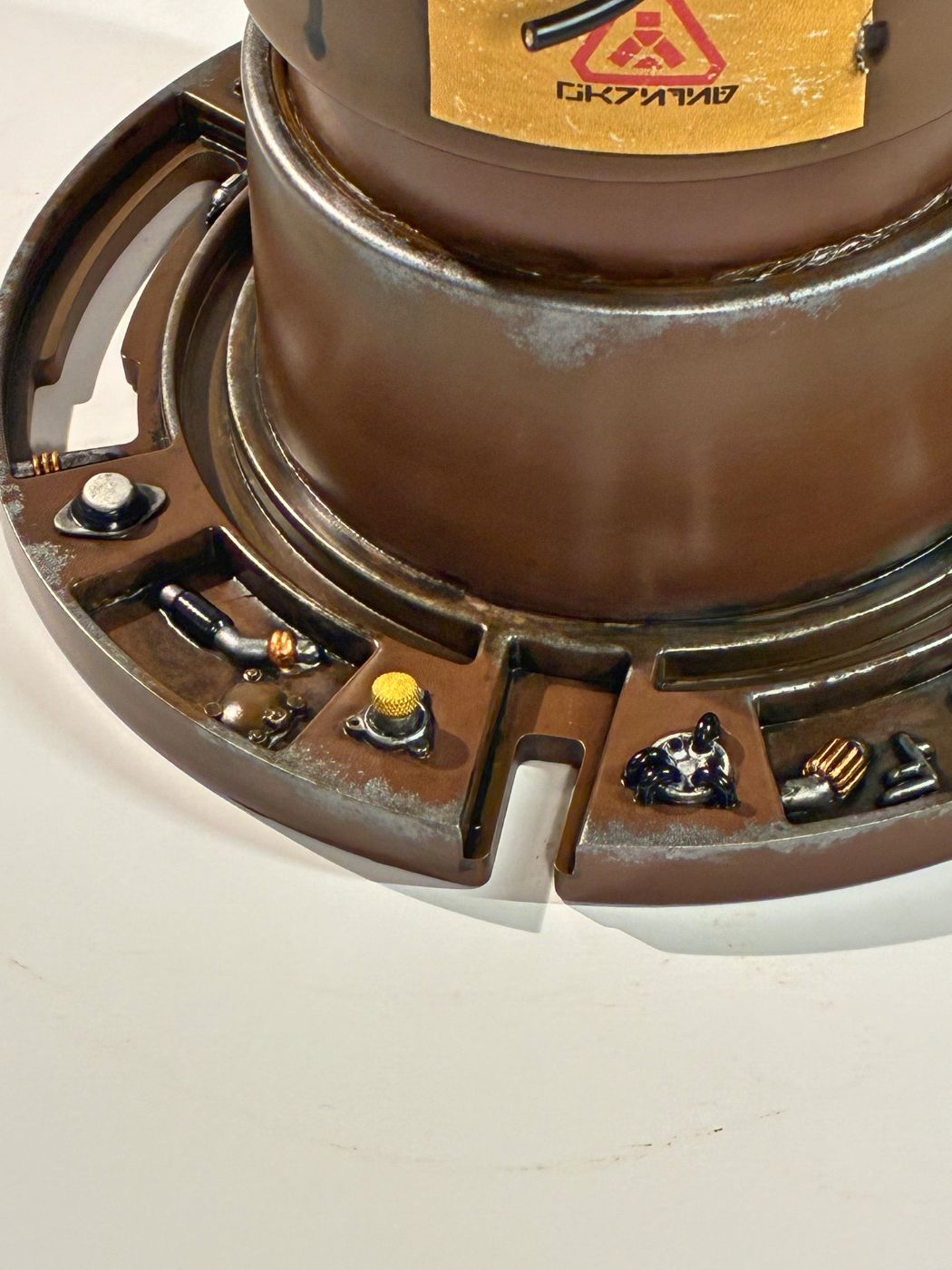
Threepio began as an exploration of embodied artificial intelligence: the idea that a conversational system can be experienced not merely as software, but as a socially present physical object. Inspired by the communicative identity of C-3PO, the project asks how personality, voice, responsiveness, and physical presence can transform the way people experience AI.
The objective was not simply to recreate the appearance of a fictional character. It was to engineer a working system capable of real-time conversation, recognizable personality, and tangible physical interaction.
02 / Human-AI Interaction
AI becomes different when it occupies a shared physical environment.
Most conversational AI systems are experienced through screens and speakers disconnected from physical identity. Threepio investigates a different interaction model: a system whose voice, personality, lighting, hardware, and physical presence work together to create a more socially legible experience.
The project draws from communication theory, including the Media Equation and Social Information Processing Theory, which help explain why people respond socially to artificial systems when those systems communicate through recognizable patterns of tone, responsiveness, and personality.
"Threepio is not only an engineering build. It is an applied human-AI interaction experiment investigating how intelligence becomes presence."
Transition Diagram
03 / System Architecture
A modular pipeline built for real-time conversation.
Threepio operates as a continuous conversational loop. Live speech is captured, detected, transcribed, interpreted, shaped through a character persona layer, synthesized into voice, processed for tonal authenticity, and played through an embedded acoustic system.
Microphone Input
An INMP441 I2S MEMS microphone captures live user speech through a compact digital audio interface.
Voice Activity Detection
RMS energy thresholds and WebRTC-based frame classification distinguish intentional speech from silence and ambient noise.
Speech-to-Text
Faster-Whisper provides local transcription capability optimized for efficient speech recognition.
Context & Memory
Conversation history and system instructions are assembled before response generation, enabling continuity across interaction.
Language Model Reasoning
A language model interprets the input and generates a context-aware response.
Persona Layer
A dedicated layer shapes phrasing, tone, cadence, and conversational behavior to maintain a recognizable Threepio personality.
Text-to-Speech
A modular speech-generation layer converts responses into audible output through OpenAI or ElevenLabs-based text-to-speech providers.
Voice Processing Chain
An FFmpeg-based signal chain applies equalization, compression, delay, chorus-style modulation, and filtering to transform neutral synthesized output into a more metallic, character-consistent vocal profile.
Exciter Speaker Output
Instead of relying on a visible traditional speaker, an embedded exciter vibrates the physical structure, helping create the illusion that the voice originates from within the droid itself.
04 / Software
Engineering the interaction loop.
Threepio was developed primarily in Python using a modular runtime architecture. Rather than placing every responsibility into one linear program, the system separates speech capture, transcription, reasoning, persona shaping, synthesis, digital signal processing, playback, and hardware control into components that can be independently tested and refined.
Ambient Conversation
A microphone-driven interaction mode enables continuous conversational operation in a physical environment.
Interruptible Speech
Barge-in handling and interruptible playback allow the user to speak naturally rather than waiting through rigid response cycles.
Modular Providers
Speech recognition, reasoning, and voice-output components can be changed or refined without rebuilding the entire system architecture.
Technical Stack
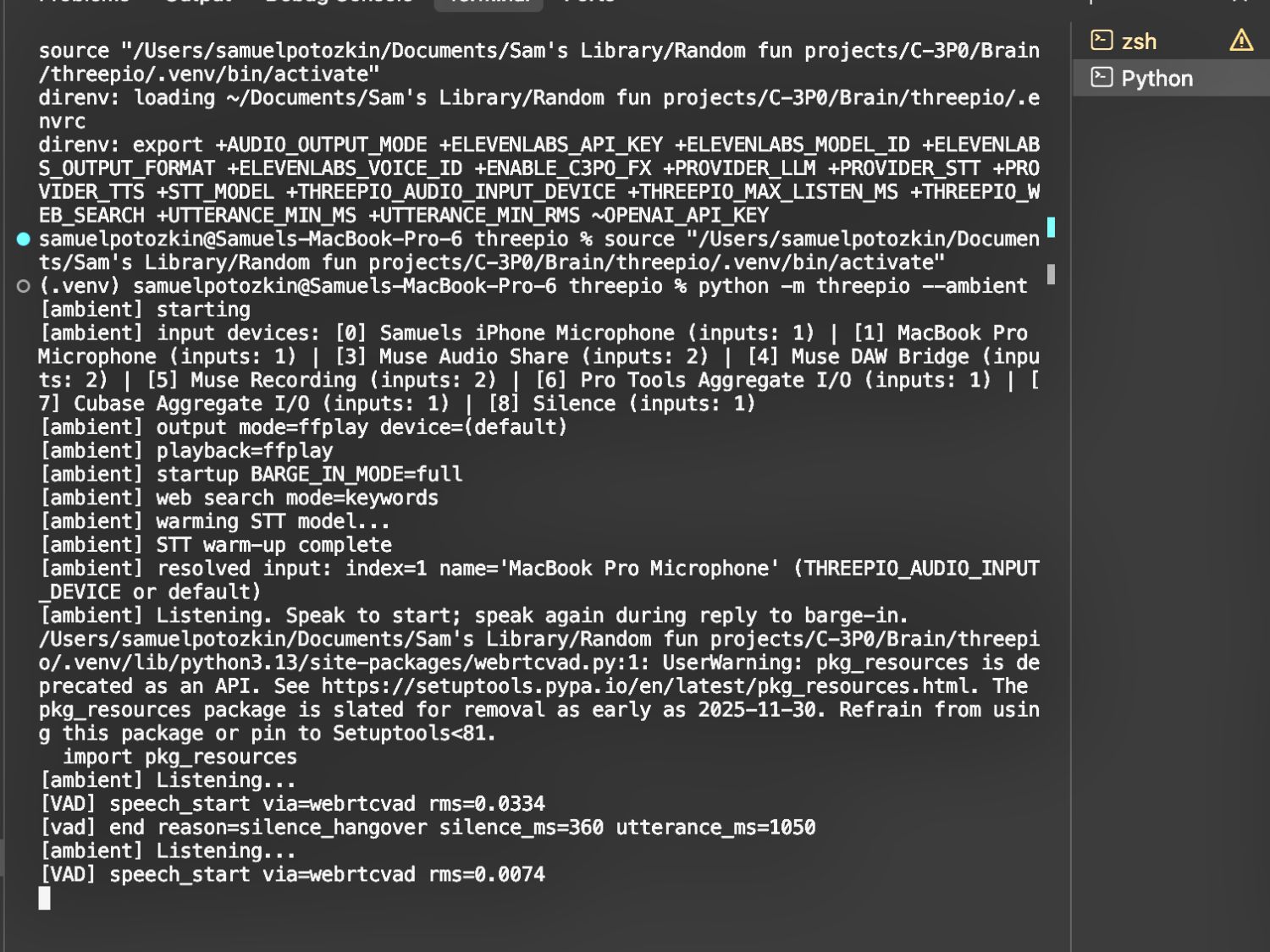
[ Terminal ]
Code · Interaction Loop
05 / Embedded Systems
The computer lives inside the object.
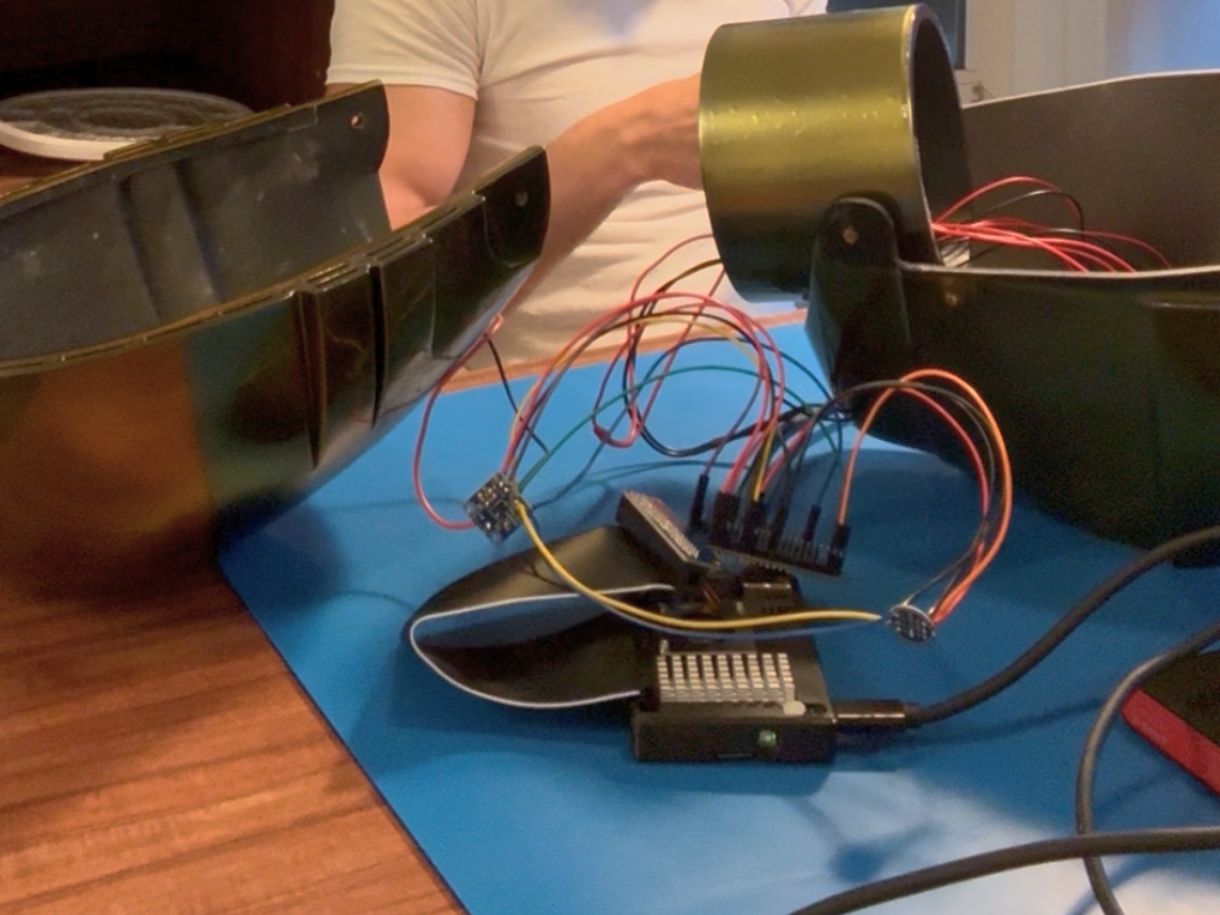
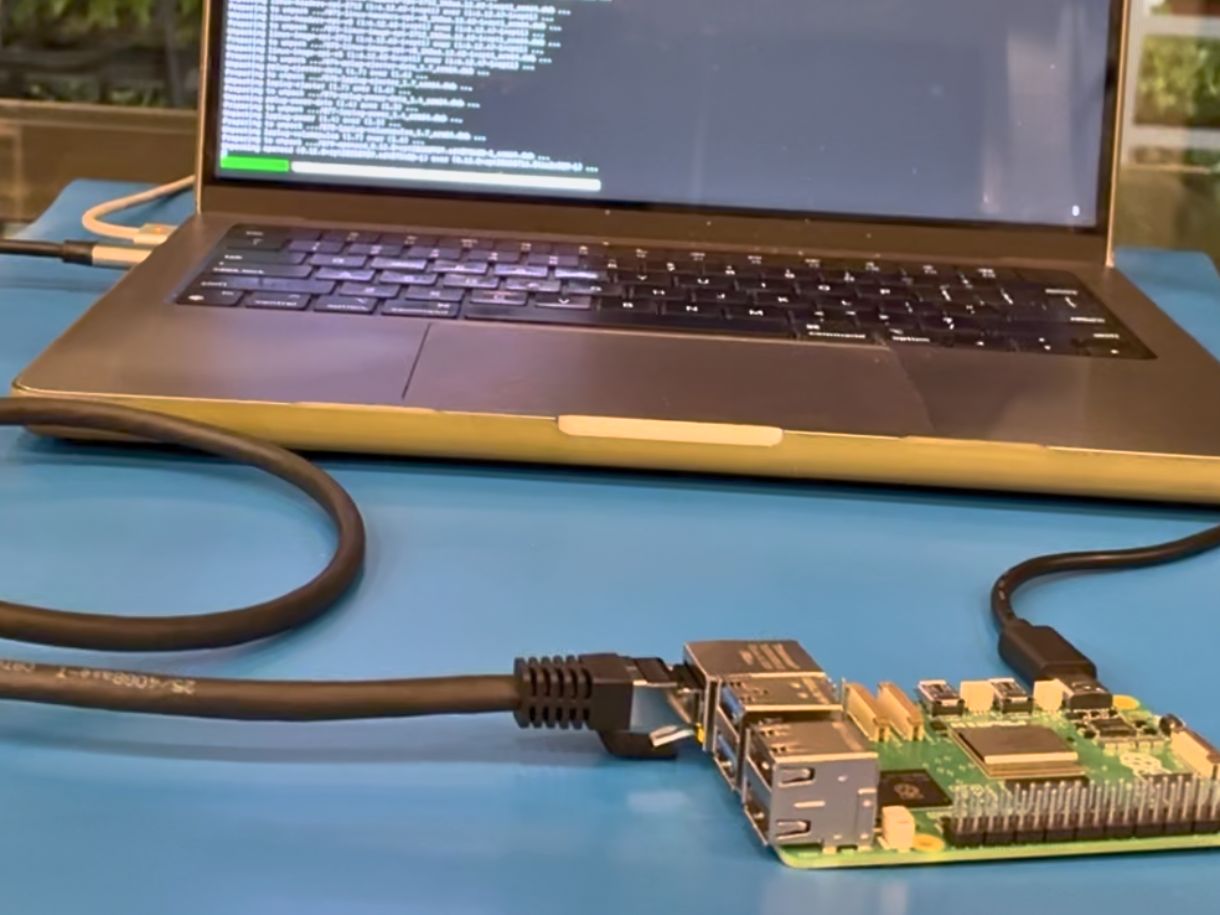
Threepio is powered by a Raspberry Pi 5 embedded directly within the physical structure. The platform coordinates microphone input, language-model communication, text-to-speech generation, digital signal processing, LED control, and audio playback while operating within the limited internal volume of the head and neck assembly.
Building inside a constrained physical enclosure introduced practical engineering challenges involving component placement, thermal considerations, cable management, audio feedback, accessibility, and reliable fitment.
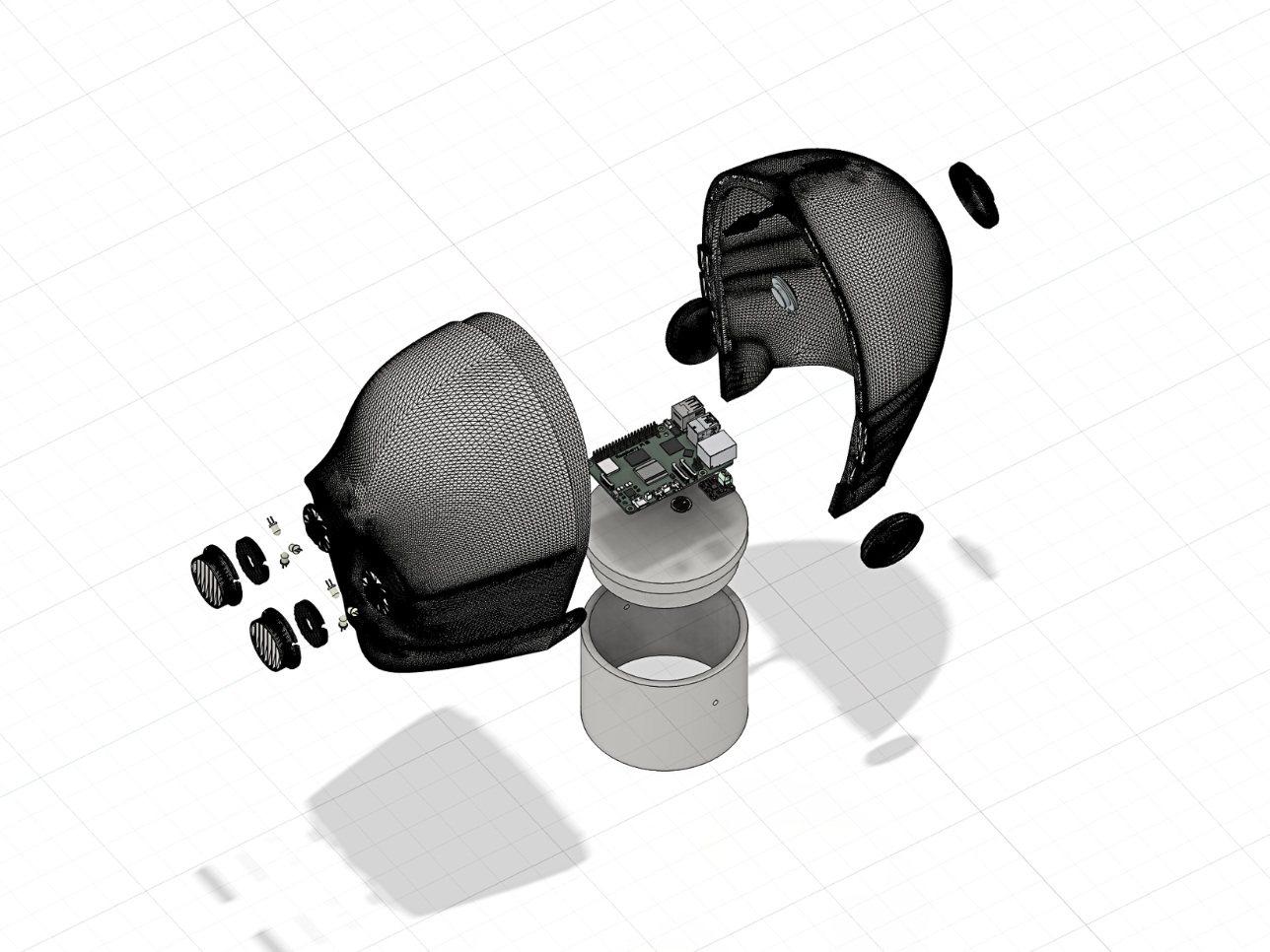
[ Diagram ]
Exploded Layout · Internal Component Placement
06 / Acoustic System
Designing a voice that feels located inside the character.
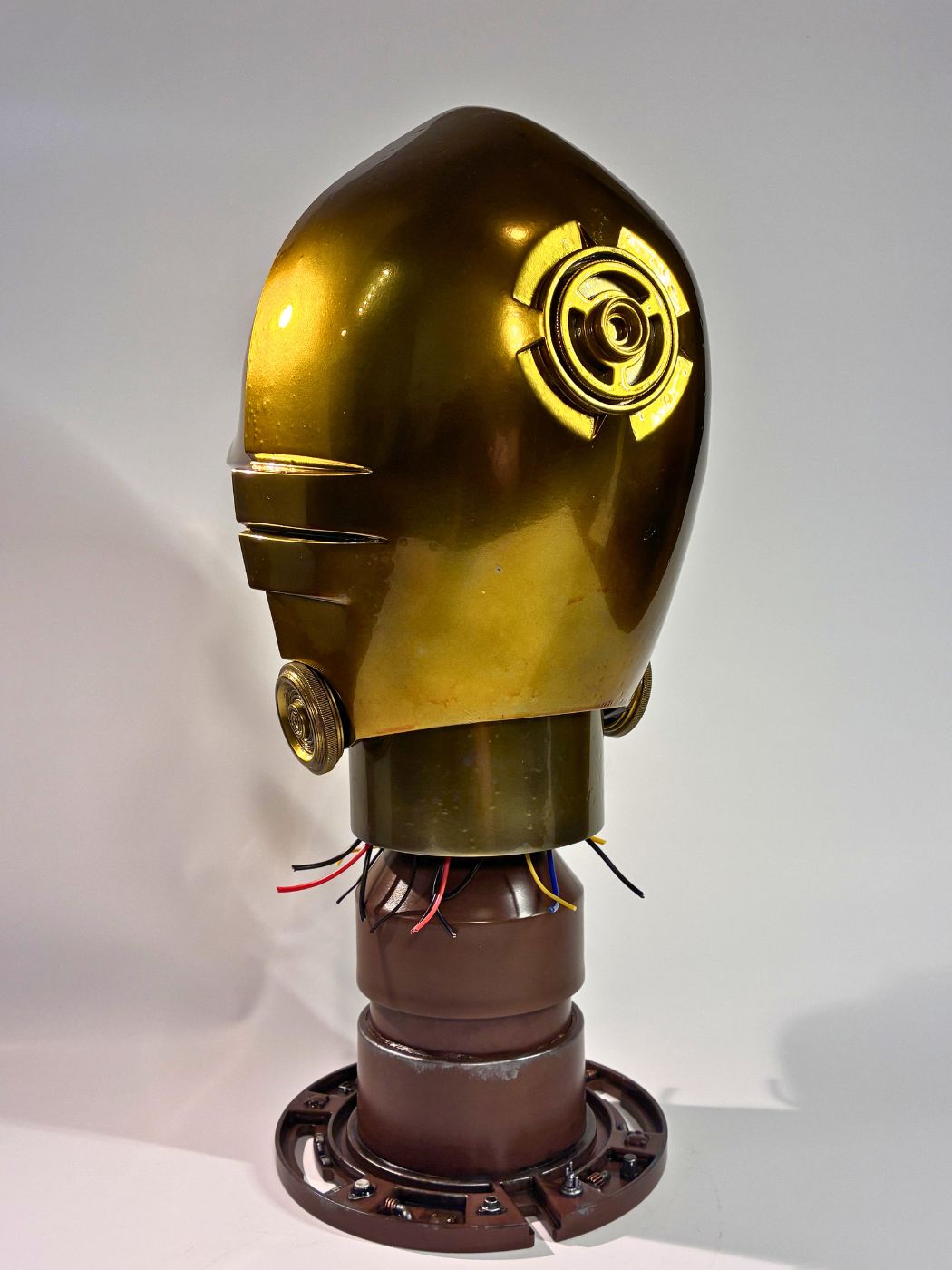
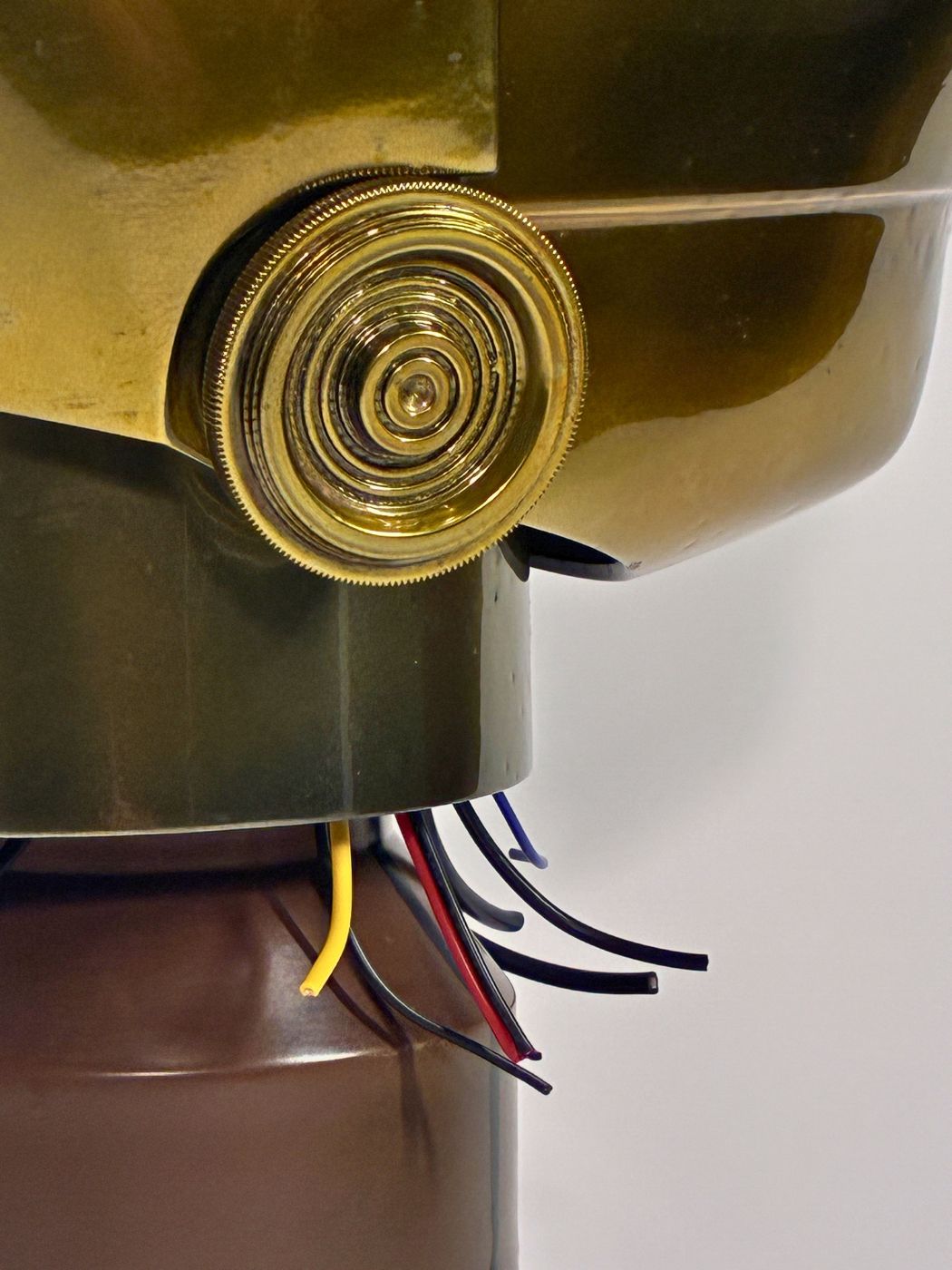
The output system was designed around more than speech intelligibility. It needed to reinforce the illusion that the voice belonged to the physical object itself. Threepio uses an exciter speaker rather than a conventional exposed cone speaker; the exciter transmits vibration into the structure, allowing portions of the housing to act as a radiating acoustic surface.
The raw synthesized voice was further transformed through a custom digital signal processing chain. Delay-based reflections, chorus-style modulation, equalization, compression, and filtering were tuned to create a layered metallic vocal quality influenced by the sound-design approach associated with the original film character.
DSP Signal Chain
Acoustic Concept
07 / CAD & Physical Integration
Redesigning the structure to house the intelligence.
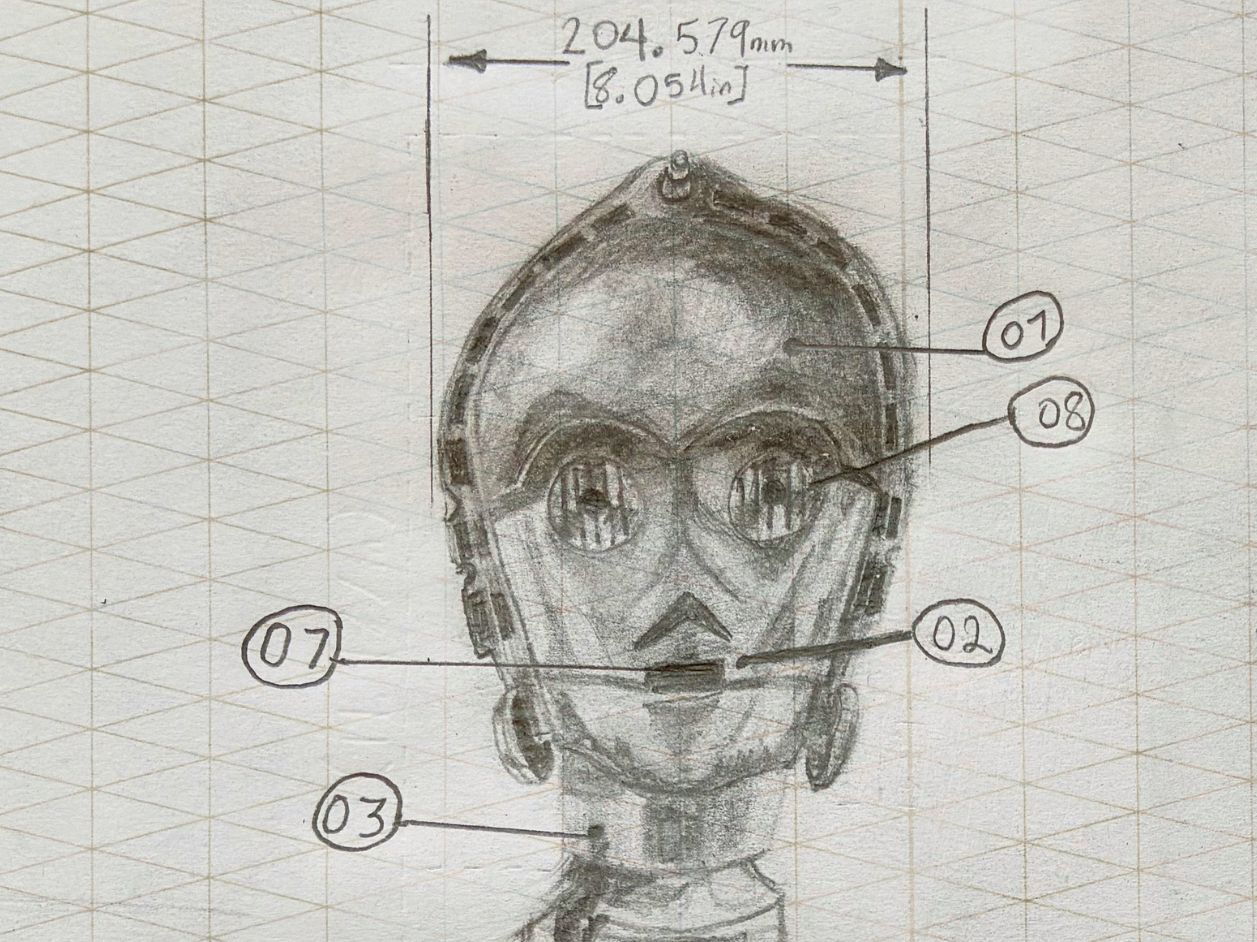
The primary head geometry was derived from high-fidelity digital scans of the original film prop. The neck assembly, however, required original CAD redesign after the available model proved structurally insufficient for the project's embedded hardware requirements.
Sam redesigned the neck assembly from scratch to support the Raspberry Pi developer board, incorporating a lid structure that securely houses the computing platform while preserving stability and maintaining the intended external form.
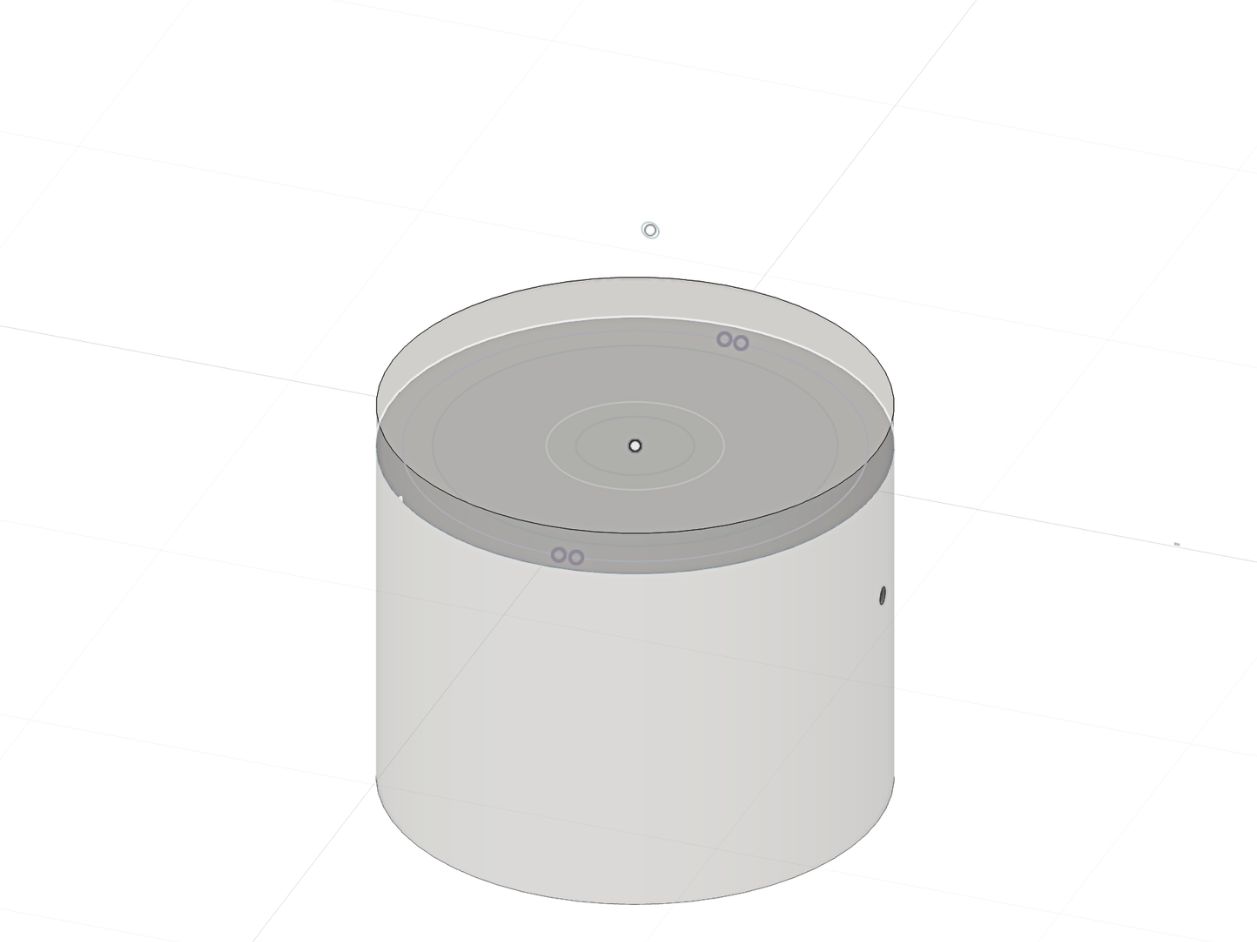
[ CAD ]
Original CAD Neck Render
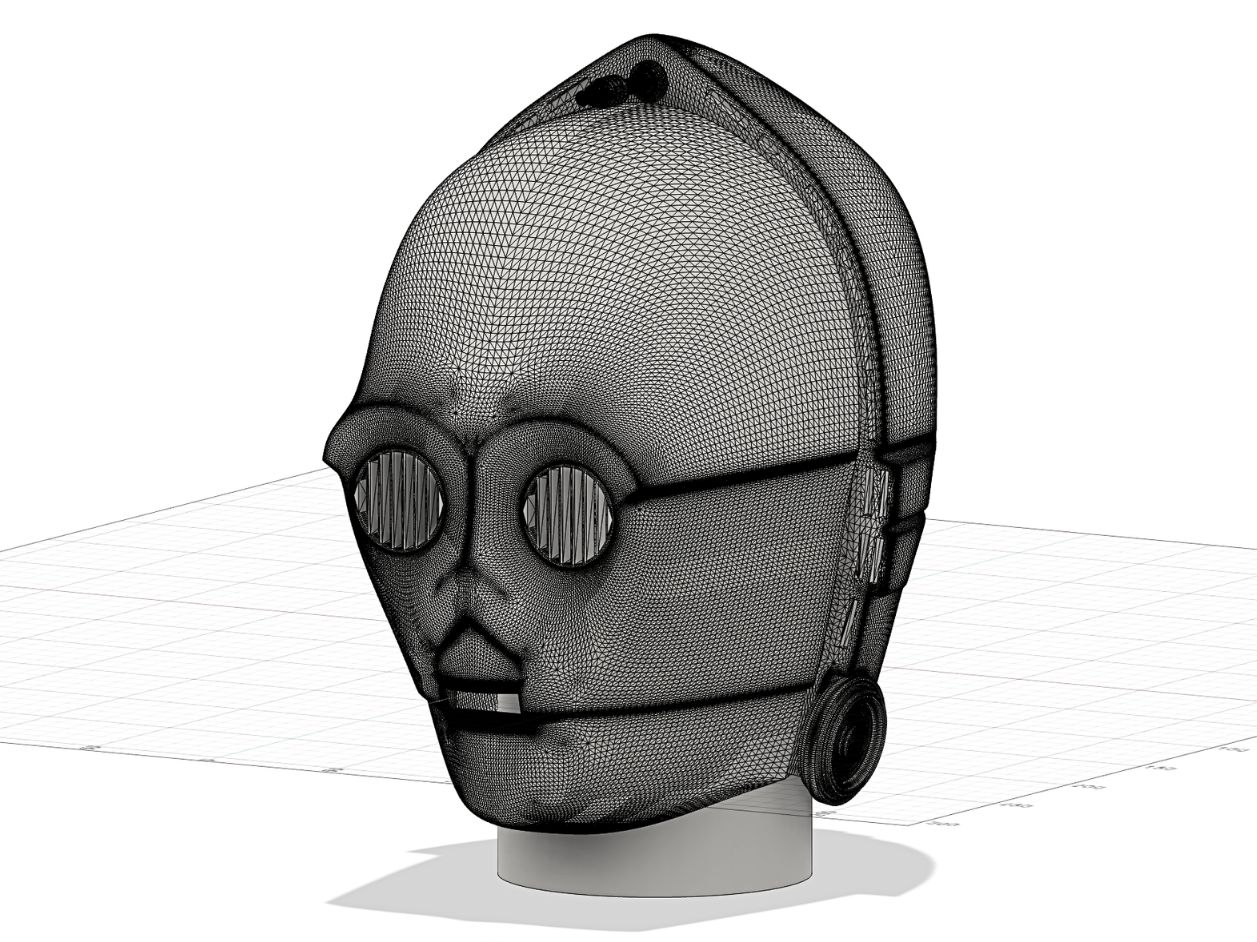
[ CAD ]
Full Assembly Test Fit
Finished shell / component alignment
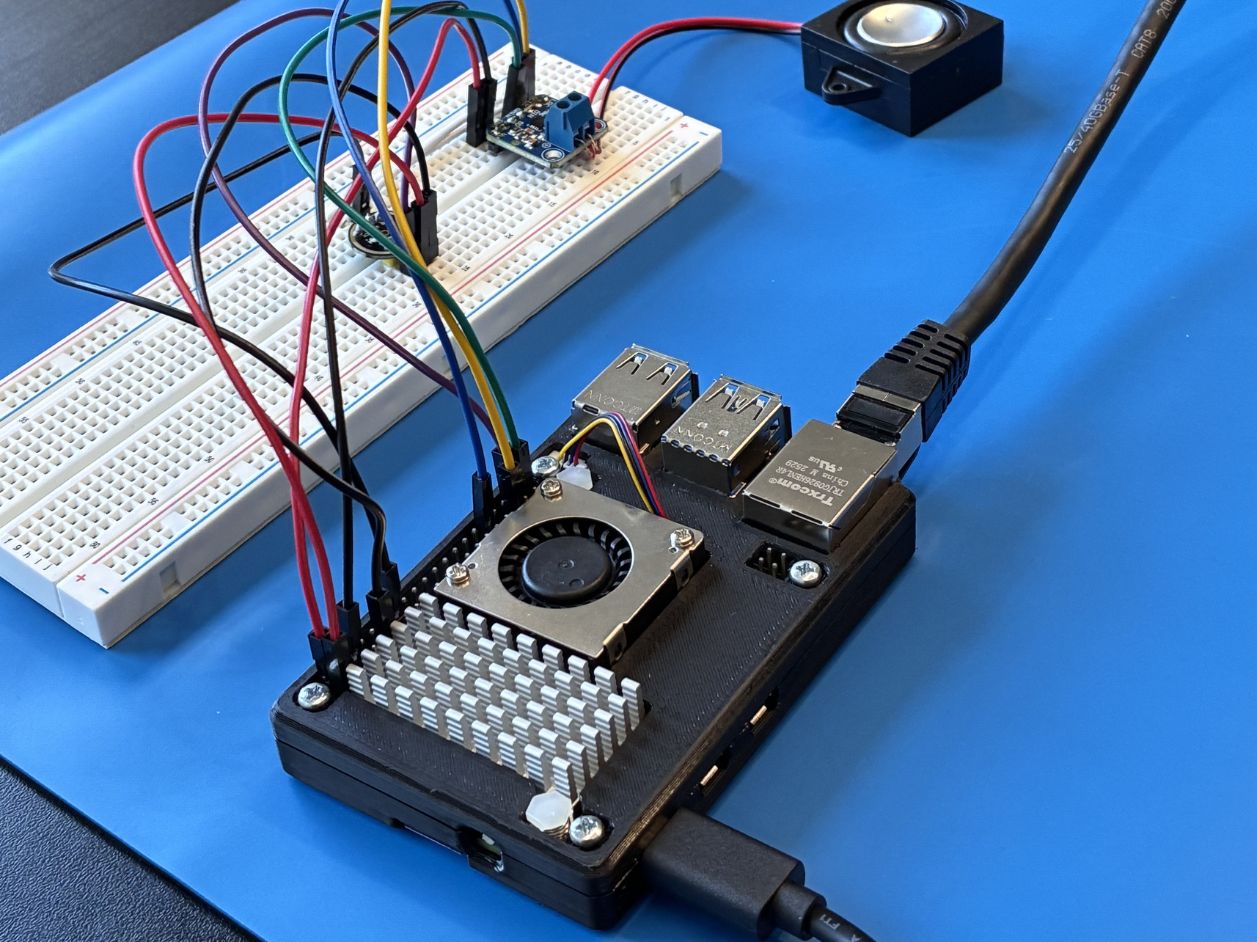
[ CAD ]
Raspberry Pi Housing Design
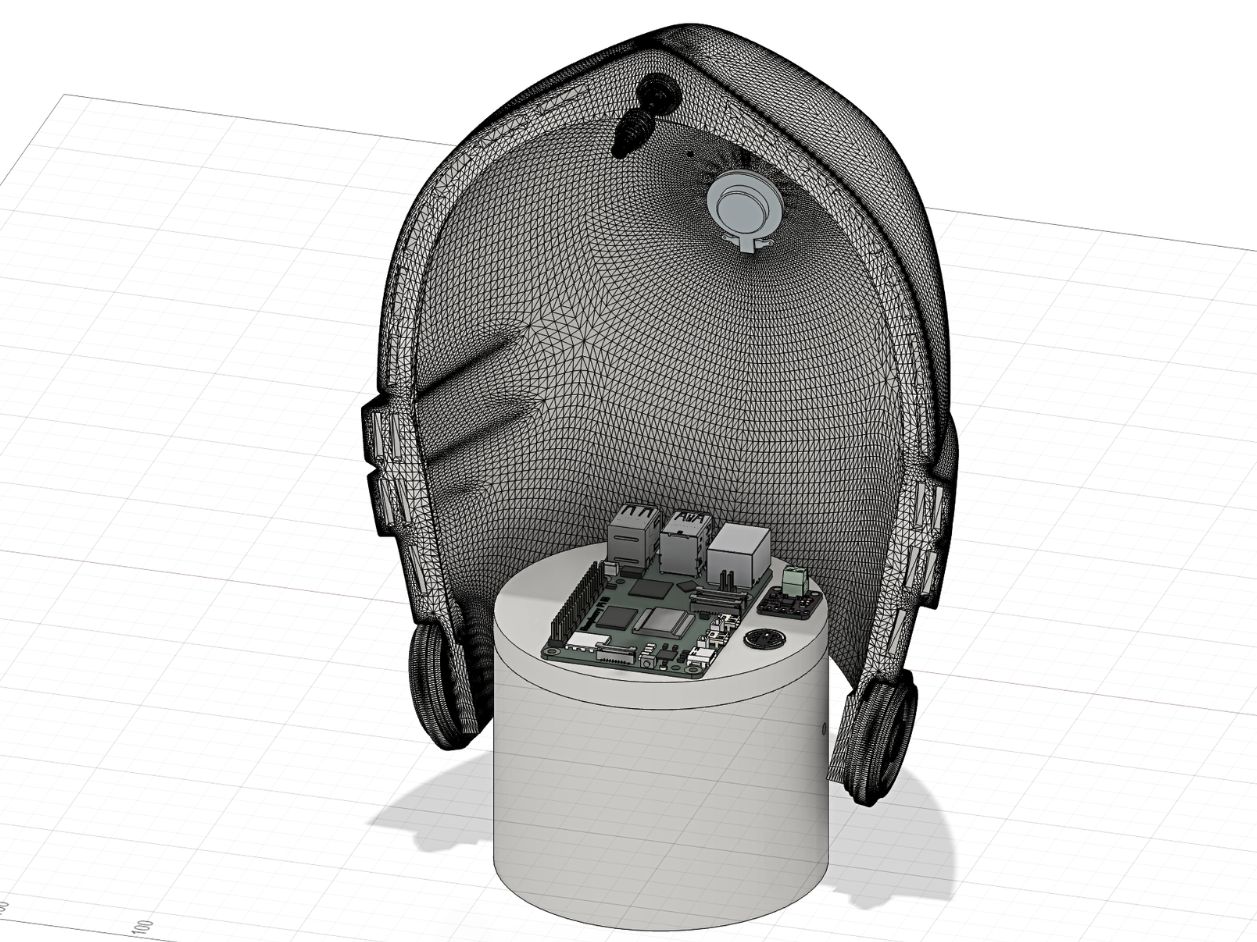
[ CAD ]
Internal Fitment Visualization
[ CAD ]
Technical Concept Sketch
Interactive Assembly
Open Interactive Viewer
Disassemble the AI-powered Threepio head to inspect the shell, eye assemblies, audio exciters, and internal compute system.
08 / Electrical Integration
Board-level assembly inside a finished physical product.
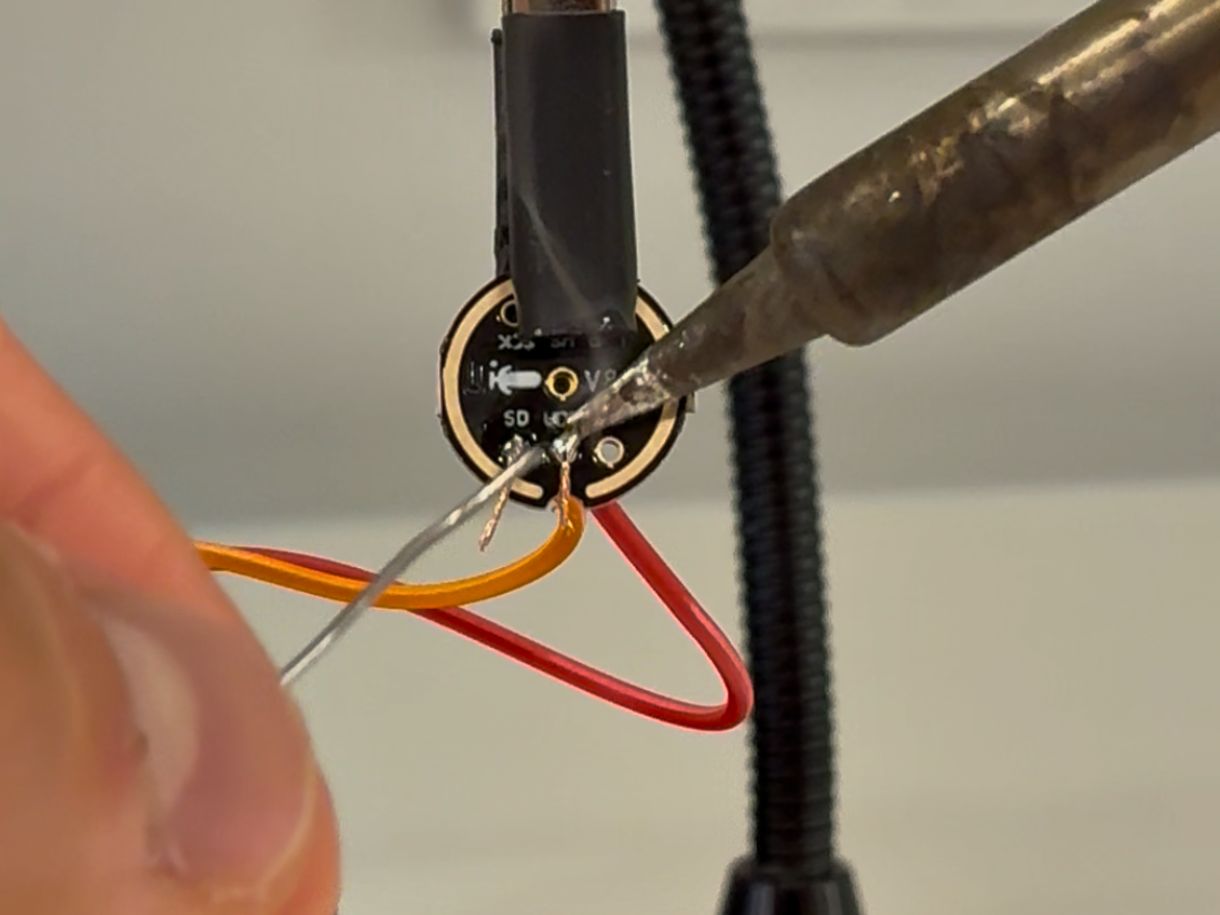
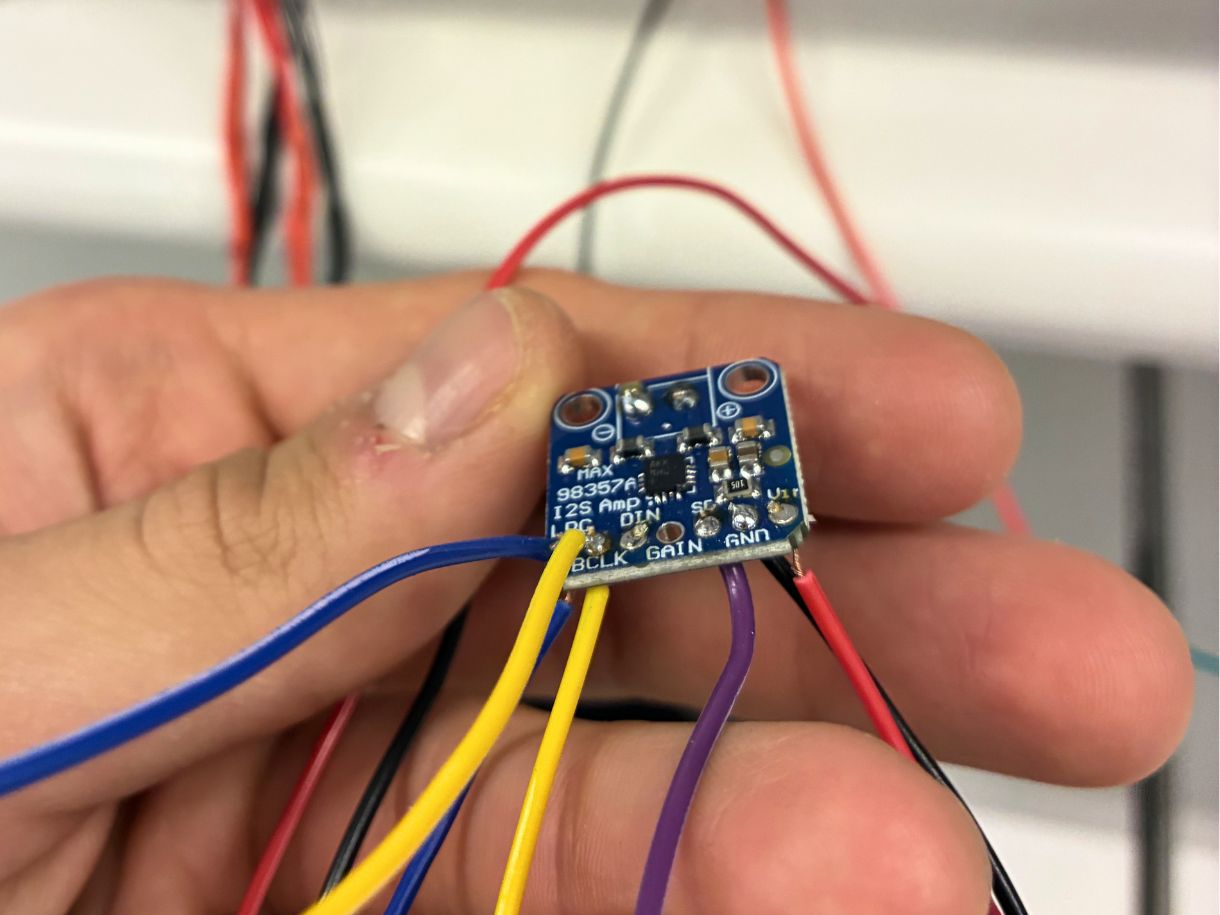
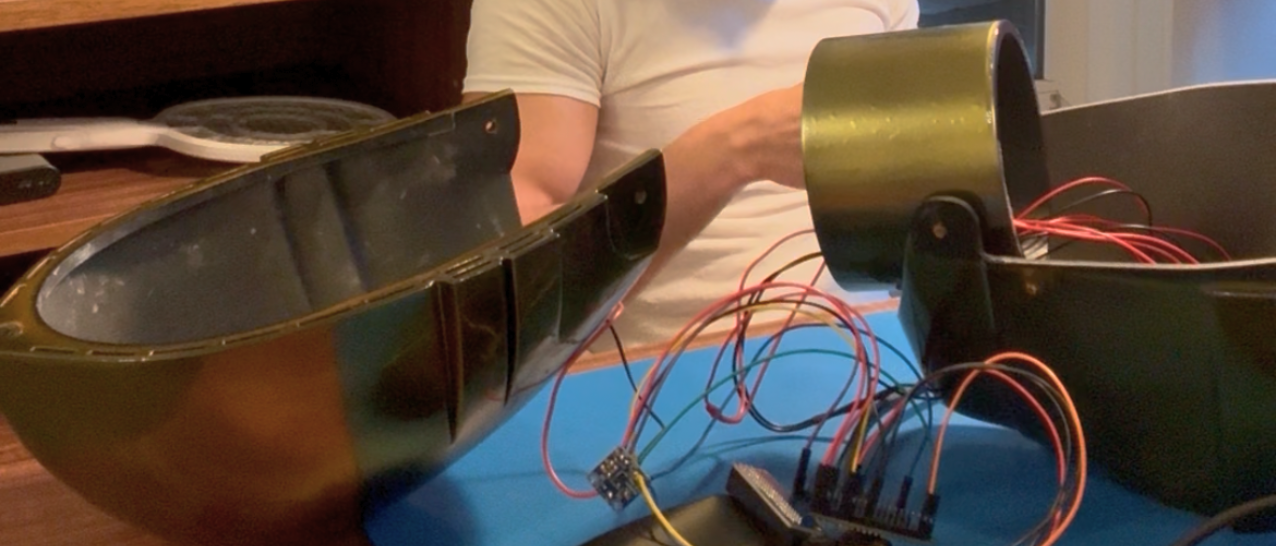
Bringing the software system into physical form required soldered electrical integration between the Raspberry Pi, microphone, amplifier breakout board, LED assemblies, and acoustic output hardware. Reliable conductive connections and careful wiring were essential to supporting digital audio transmission, power delivery, peripheral control, and stable operation inside a compact enclosure.
New skill acquired during the build
Soldering and board-level hardware integration were learned and applied during development in order to move the project from concept into a reliable physical system.
[ Hardware ]
Soldering
[ Hardware ]
Breakout Board
[ Hardware ]
Internal Wiring
[ Hardware ]
RPi Connection
09 / Physical Housing
Fabricating the body that made the system feel present.
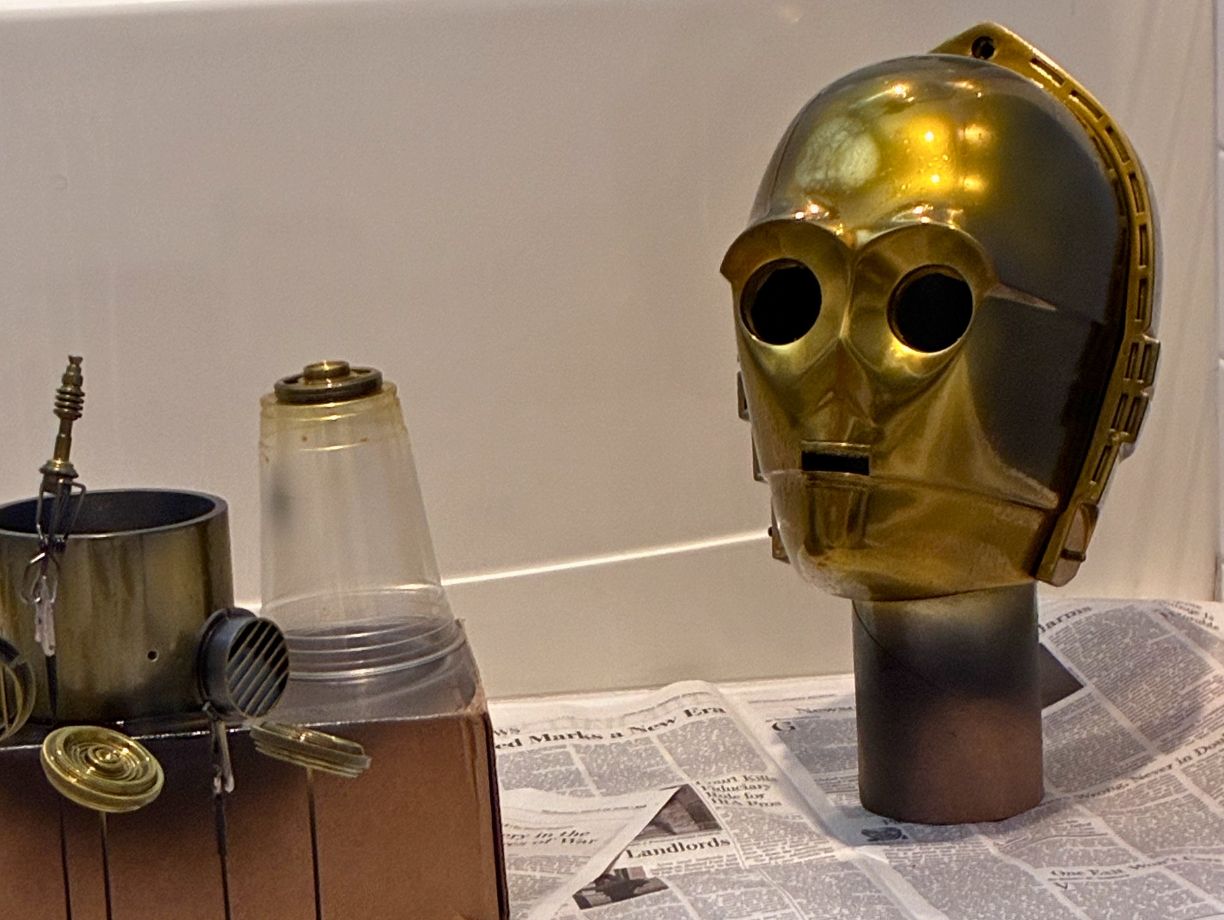
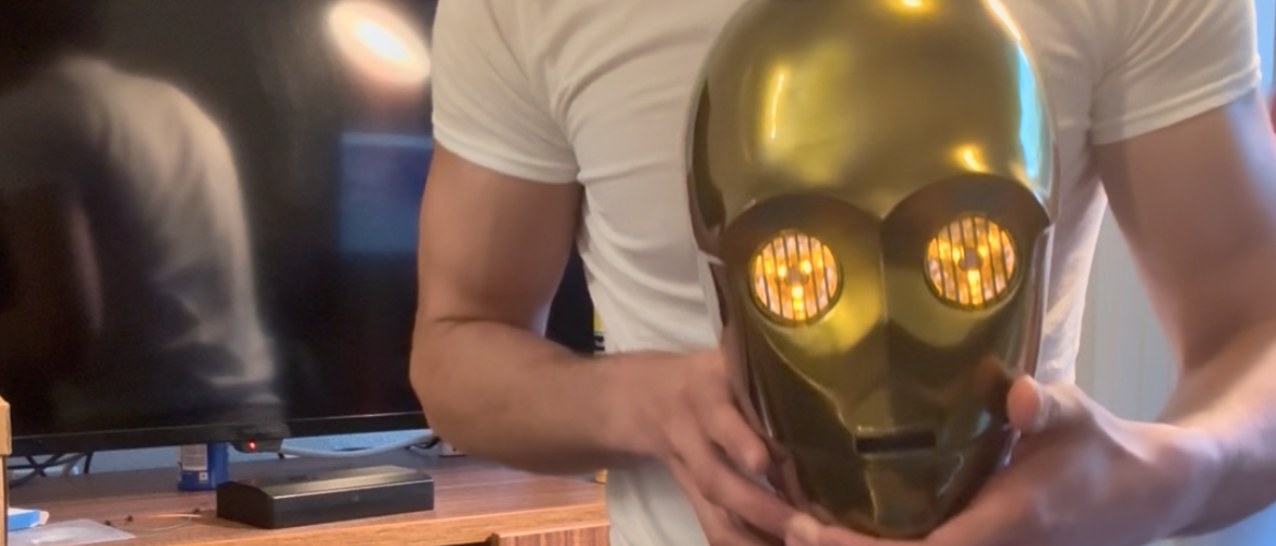
Threepio's housing was developed as the physical interface for the system: the visible form that made the software feel present in space. Enclosure, surface finish, internal mounting, and exterior detailing were treated as part of the interaction design, not cosmetic afterthoughts.
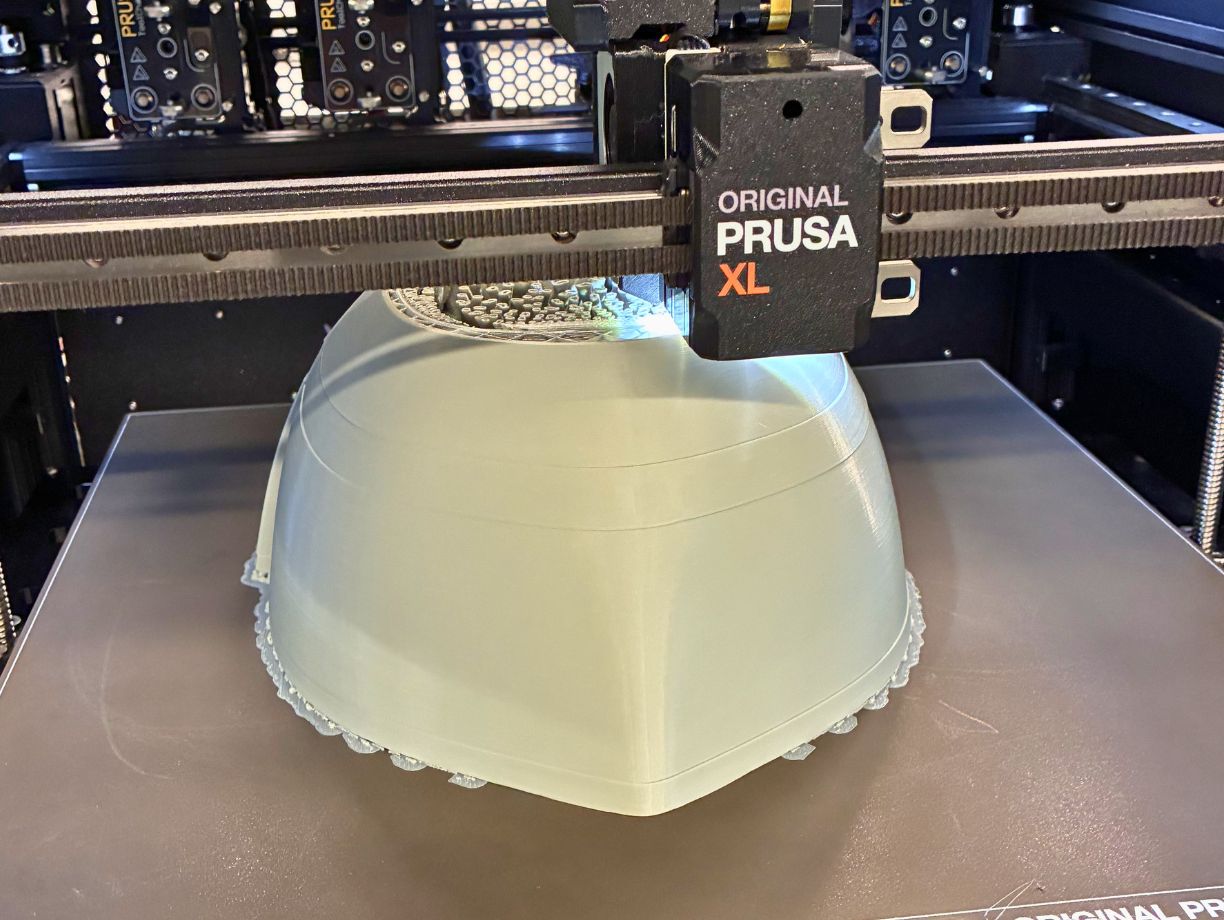
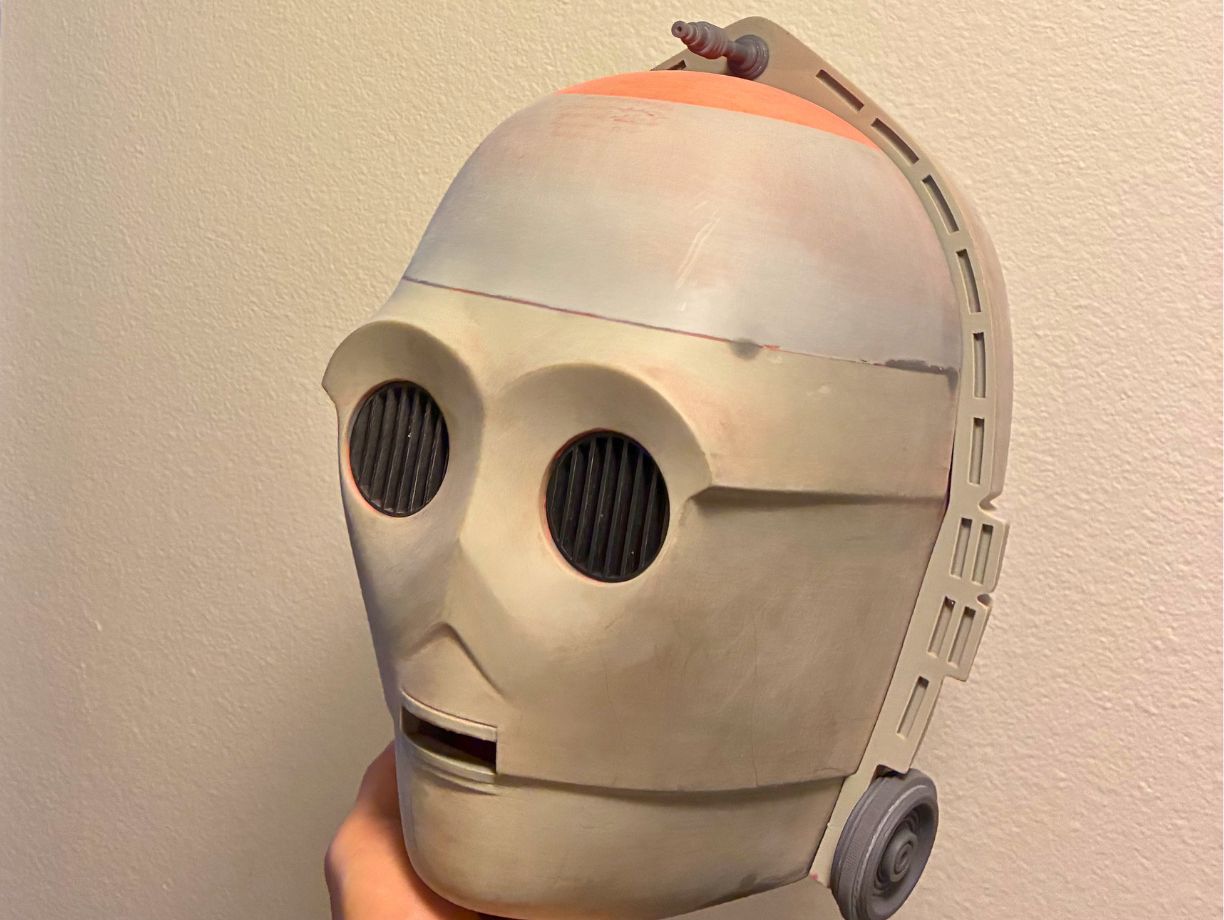
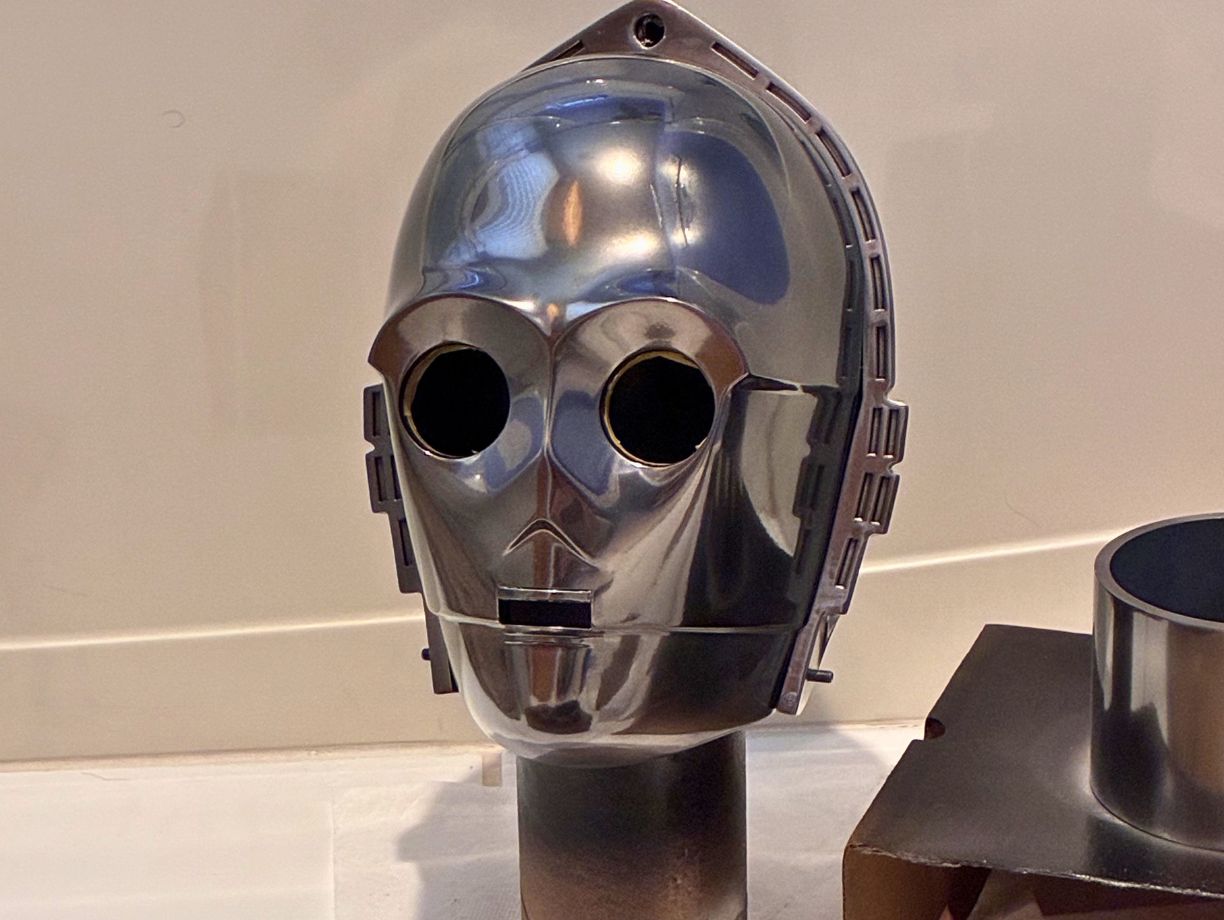
Fabrication and finishing prepared the printed structure, refined surface quality, assembled the housing, applied metallic finish layers, and integrated the internal electronics into a compact form; connecting the software architecture to a tangible object users could see, hear, and respond to.
Physical Design Role
The housing was not only an exterior shell. It acted as the structural interface between the AI system, acoustic output, lighting, electronics, and user perception.
[ Hardware ]
Raw Printed Parts
[ Hardware ]
Surface Prep
[ Hardware ]
Metallic Finish
[ Hardware ]
Gold Finish
[ Media ]
Final Housing
Completed object media
[ Media ]
Detail Shot
Exterior detail
Printed Housing
3D-printed enclosure components forming the physical shell.
Metallic Finish
Layered finishing gave the housing a droid-like material presence.
Embodied Interface
Made the AI system legible as a social object, not only software.
10 / Fabrication & Finish
A technical system finished as a convincing physical experience.
The finished surface was developed through a multi-stage process influenced by automotive paint workflows. External surfaces were progressively sanded and repaired, prepared with a reflective base, coated with Alclad II chrome lacquer, tinted using a custom translucent yellow-to-orange lacquer mixture, and protected under a final 2K automotive clear shell.
The reflective gold effect depends on light traveling through the translucent tint layer, reflecting from the chrome below, and returning through the pigment. As a result, surface consistency, gloss depth, and optical smoothness directly influenced the realism of the finished object.
Materials Stack
Failure, Recovery, Refinement
Development included repairing a cracked rear dome, correcting surface defects, addressing orange-peel texture in the clear coat through wet-sanding and recoating, and iteratively refining internal hardware fitment. These setbacks became part of the engineering process rather than reasons to abandon the build.
11 / Iteration
Built through constraint, failure, and refinement.
Performance
Low-Latency Interaction
Maintaining responsive conversational performance on compact embedded hardware.
Audio
Acoustic Feedback
Preventing microphone feedback and self-triggering from speaker output inside a confined enclosure.
Hardware
Physical Constraints
Integrating compute, audio, lights, wiring, and access requirements within limited internal space.
CAD
Structural Redesign
Replacing an insufficient neck model with a custom CAD assembly built around embedded hardware needs.
Finishing
Surface Recovery
Repairing damage and correcting finishing defects without compromising the final physical presentation.
Threepio was not a linear assembly exercise. It required repeated cycles of diagnosis, redesign, testing, and refinement across software, hardware, CAD, electronics, acoustics, and materials.
12 / Open Source
Built to be explored and extended.
Threepio's codebase is publicly available on GitHub, documenting the software architecture behind the conversational system and enabling others to examine, learn from, or extend the platform for future embodied AI experiments.
[ Hardware ]
GitHub · Repository Preview
13 / Why It Matters
From computational intelligence to interactive presence.
Threepio demonstrates how conversational AI can move beyond screen-based interfaces and into physically situated, interactive systems. By combining speech processing, language-model reasoning, persona design, embedded computing, acoustic output, and physical embodiment, the project explores how artificial intelligence may become more natural, memorable, and socially meaningful in human environments.
What began as an attempt to bring a fictional character into the real world became a broader investigation into the future of embodied AI: systems defined not only by what they can compute, but by how people experience interacting with them.
14 / Recognition